(to 28/02/2022)
(to 28/02/2022)
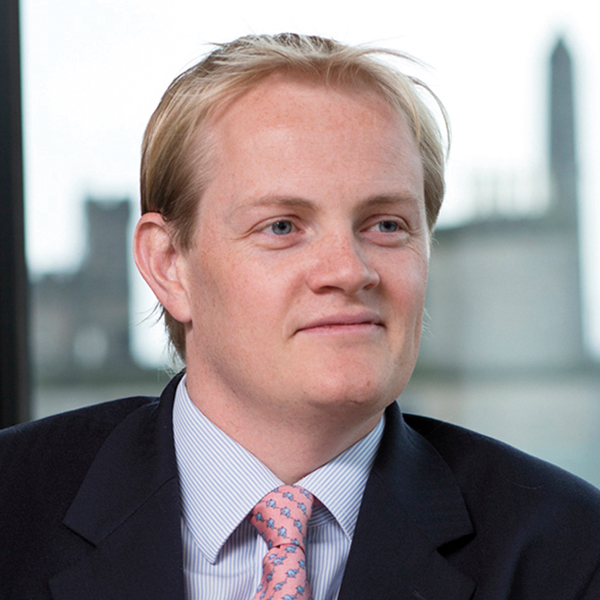
One of the biggest year-on-year climbers is Baillie Gifford’s Roderick Snell, who has leapt from a position outside of the Top 250 in 2021 to be the sixth-highest-ranked fund manager in the rundown for 2022.
Snell has not taken the easy path either, as he has achieved the necessary risk-adjusted returns across a number of funds straddling three investment sectors.
Snell has been with UK fund house Baillie Gifford since 2006 and heads up its emerging markets unit. However, he has a wide range of experience, which includes stints within its European and UK equity teams, as well as being able to call upon a degree in medical biology from Edinburgh University.
OVERSEEING BILLIONS
Snell’s longest stint is as lead manager on the Baillie Gifford Pacific fund, which he was named on back in 2010. In total, Snell is responsible for around $7.5bn (€6.87bn) in Asia Pacific-focused equity strategies alone, which doesn’t include his work on China-centric strategies or on broader emerging market funds.
The Baillie Gifford Pacific fund, which is UK-domiciled, focuses on finding opportunities which are likely to deliver on a five-year basis, and has an all-cap and all-sector emphasis.
Snell is supported on the Baillie Gifford Pacific fund by Ben Durrant, who was named as a co-fund manager in summer of 2021. This marked the fifth co-manager Snell had worked alongside, with his most recent partner, Ewan Markson Brown, having left in 2021 to join rival group Crux Asset Management to spearhead that group’s expansion into the Asia Pacific equity market.
Speaking recently, Snell said the emerging markets are becoming a more diverse playing field and even suggested a number of Indian stocks are starting to provide more attractive entry points than Chinese equivalents. He pinned much of this change down to the changes in the technology sectors of the respective markets. China has just gone through a period of regulatory imposition, while India has begun to flourish.